
Garden City Neighbor Sources
No single record lists everyone on a Garden City block. The county GIS viewer orients an address and its parcel. The Village tax roll adds a dated owner or mailing field. Library shelves may hold a telephone-book page or a newspaper listing from decades past. Each residents directory or roll speaks in its own wording and its own era. Read a tax-roll owner carefully. That field may hold a trust, a company, or a mailing address rather than the name of anyone actually living there.
| Source | What It Shows About a Block | Access |
|---|---|---|
| Nassau Land Records Viewer | Address-to-parcel context, SBL identifiers, assessments, district information, and mapped surroundings | Public viewer; CAPTCHA or account behavior can vary |
| Nassau GIS map | Parcel, roadway, place-boundary, aerial, and historic-map layers around an address | Public map, identify/select, and measurement tools |
| Garden City assessment rolls | A dated parcel row with owner or mailing label, location, map-lot, and County SBL | Online PDF archive; portal history is separate |
| Village Archives | Historical telephone books, yearbooks, newspapers, atlases, and local reference material | Contact the archive for a defined title, year, or address range |
| Village Clerk or records office | Narrow municipal records such as dated notices, maps, or records from the responsible department | Office contact or a focused FOIL request |
Two parcels side by side rarely appear in the same record. Neighbors on the map are not automatically connected by residence, family, or association. Define the small area with parcel data first. Then keep the source label with each fact. That label states what the record truly says.
Garden City Block Boundaries First
Settle the jurisdiction before anything else. Garden City sits inside Nassau County and the Town of Hempstead as an incorporated Village. County GIS place-boundary layers draw the line between Village, neighboring cities, and unincorporated land. A postal label or a ZIP result alone cannot settle it. Neither one tells you whether a parcel lies inside the Village. Begin with the address. Check the place boundary. Record the parcel number and roll year you get back.
Many local addresses carry 11530, yet postal delivery zones and municipal lines are different things. The Village's named LIRR stations help orient old records. But a station nearby proves geography, nothing more. This matters most near an edge. There, a Town of Hempstead reference or a shared street name can masquerade as a Garden City record.
Note: Keep street suffixes and directions exactly as printed. A normalized search term is not the official historic address.
Garden City Neighbors by Parcel
Start from one confirmed address and stay small. Nassau GIS layers cover parcels, lots, roadways, boundaries, and aerial views. They also include the 1926 and 1950 maps. The county publishes no radius or buffer tool in its public viewer. So a hand-picked set of nearby parcels beats any claim of a fixed-distance search. Use the identify, select, and measurement controls. Describe what you get as nearby on the map, nothing more.
- Search the address in Nassau LRV, following its street-format instruction, and record the County Section-Block-Lot values.
- Open the parcel in the GIS viewer, turn on place boundaries and road layers, and identify the immediately adjacent parcels shown on the map.
- For each parcel, retain the PARID or SBL and compare the returned roll year with the Village assessment-roll row.
- Separate the map relationship from the record relationship: a nearby parcel and an owner field do not confirm household membership or current occupancy.
When one block grows into a full named street, the Garden City street directory lays out the address-by-address record workflow.
Garden City Map Layers
Map layers earn their keep by showing the geography behind each record. Parcel and lot layers separate one piece of land from the next. Roadway, railroad, parks, and boundary layers place that land in context. Historic county layers date from 1926 and 1950. Later state layers explain more of the story. Together they show why an old map describes a section differently. They cannot promise accuracy for modern addresses. A current address may not have held the same number or legal description a century ago.
Work in order. Start with the address, then the parcel. Next come PARID or SBL, then the place boundary. Finish with the Village roll's local map-lot. County and Village identifiers use different formats, so keep both. The same caution applies to distance. Measure only when a documented question calls for it. Never turn a map view into a claim that someone was tied to a nearby site.
Four Garden City Sections
The Village POA map preserved by NY Heritage names four broad sections: West, Estates, Central, and East. Those labels are real social and historical geography. They help order an archive search once the parcel is confirmed. This matters when an old directory, atlas, or newspaper mentions a section by name. The sections are not legal boundaries, though. They prove neither association membership nor that a person belonged to any group.
Garden City history also sets the Estates, the East section, and the later western development apart as distinct milestones. That explains why map vocabulary shifts from block to block. The Village publishes no year-specific renumbering history. So an old address should be checked against its map, roll, and source date rather than matched to a modern parcel by number alone.
Map tip. Keep the POA section name in a separate note from the County SBL, because the section map is historical context rather than a legal boundary source.
Garden City Community Archives
A block question often yields faster to historical context than to a current-name search. The Garden City Public Library Village Archives keeps local reference books, yearbooks, and telephone books from 1932 onward. It also holds historic atlases and Garden City News microfilm from 1927. Ask for a specific title, year, street, or surname variant. Log the issue date, page, printed spelling, and item type for every find. A newspaper hit is a lead. Weigh it against a primary record whenever the claim matters.
The Garden City Historical Society resources page describes the Society's archival and object collections. These cover local social, civic, religious, economic, and architectural history.
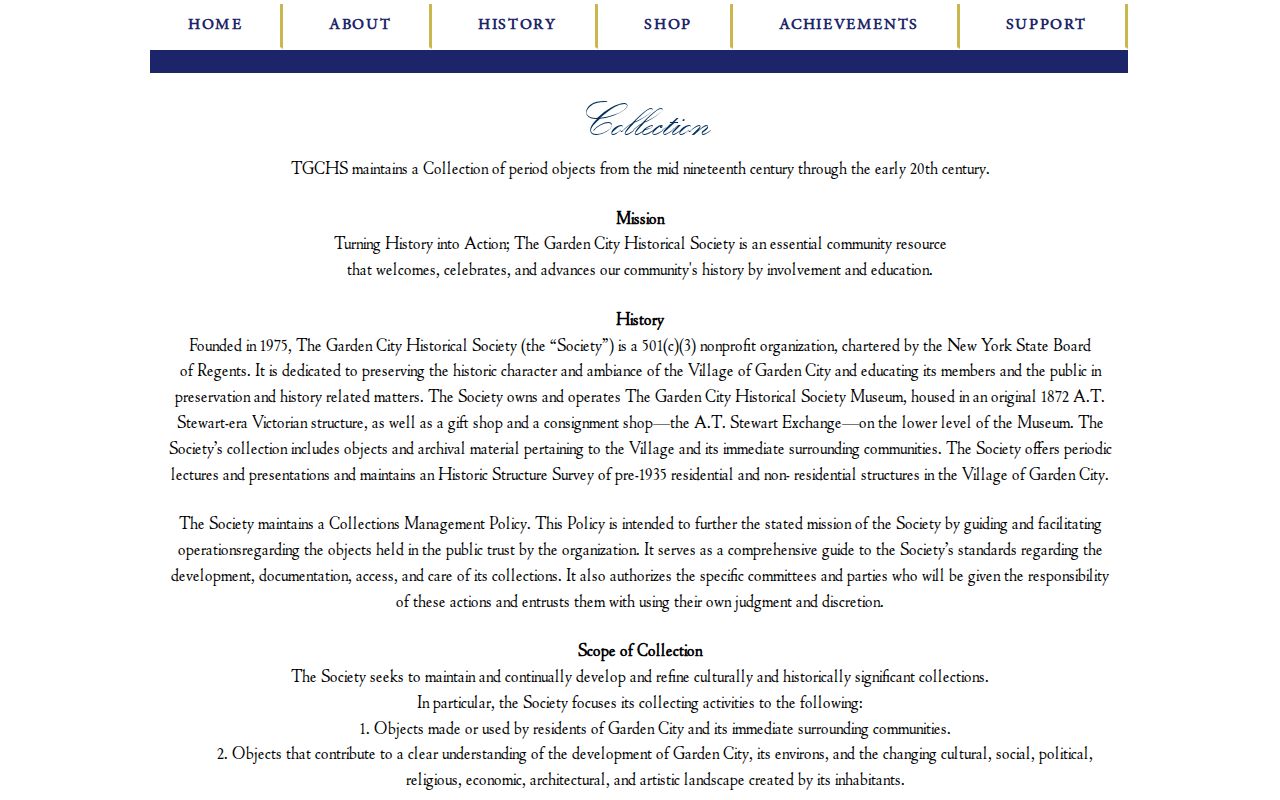
The Historical Society works by appointment rather than by roster. Its archival collections answer questions about a building, a street, or the wider community setting in Garden City. A photograph, postcard, or caption can support that context work. But it cannot authoritatively name a living person unless the item itself does. Researchers should resist guessing past that line. Its materials cover a building, a street, or the wider community setting in Garden City.
Garden City Public Contacts
None of the four property owner associations publishes a current member directory for public use. That matters. An address by itself proves nothing about who belongs. For a defined historical or civic question, the better route is the public contact. That is the institution holding the map, archive, or municipal record in question. Ask that office for a map, bylaws, an event notice, or a dated officer list. Request copies only where its disclosure terms allow.
| Garden City Public Library Village Archives | 60 Seventh Street, Garden City, NY 11530; 516-742-8405. Historical telephone books, yearbooks, newspapers, atlases, and reference holdings. |
|---|---|
| Garden City Historical Society | Apostle House, 109 Eleventh Street, Garden City, NY 11530; 516-746-0090; office@tgchs.org. Appointment-based museum and archival reference contact. |
| Nassau County Historical Society | P.O. Box 207, Garden City, NY 11530-0207; 516-538-7679. Its journal and collections support local history, but the Society says it cannot perform genealogy searches. |
| Village Clerk | Village Hall, 351 Stewart Avenue, Garden City, NY 11530; 516-465-4051. Municipal records access, forms, and departmental routing. |
A library card is not a record about a person. Neither is any archive access condition. The Library notes that some digital resources require a Village resident card or on-site use. So confirm those terms before a visit or a copying request. Keeping these access rules separate from actual records matters. It helps anyone trying to find neighbors in Garden City stay on solid ground.
Official Garden City Neighbor Records
Official records declare their custodian, scope, date, and access limits. Commercial neighbor-search services answer to no such standard. Their collection methods, update timing, and correction process can be opaque, and a Garden City resident lookup built on them inherits every one of those gaps. For any block question here, the parcel page, property roll, archive, or agency record lets a reader inspect the underlying source directly. A commercial display should never stand in for that source, and it must never be used to fill a protected field.
| Official record | Commercial neighbor tool category |
|---|---|
| Names the public custodian, record date, and record type. | May combine data from sources with different dates and unknown correction paths. |
| Allows a map, roll, filing, or archive item to be checked at the original source. | Can summarize a result without showing the underlying record or its limits. |
| Requires the researcher to distinguish owner, party, licensee, and historical listing roles. | Can blur those roles into a simplified match. |
The official NYSED verification page offers a separate public-credential search. It supports lookups by profession, by name, or by license number.
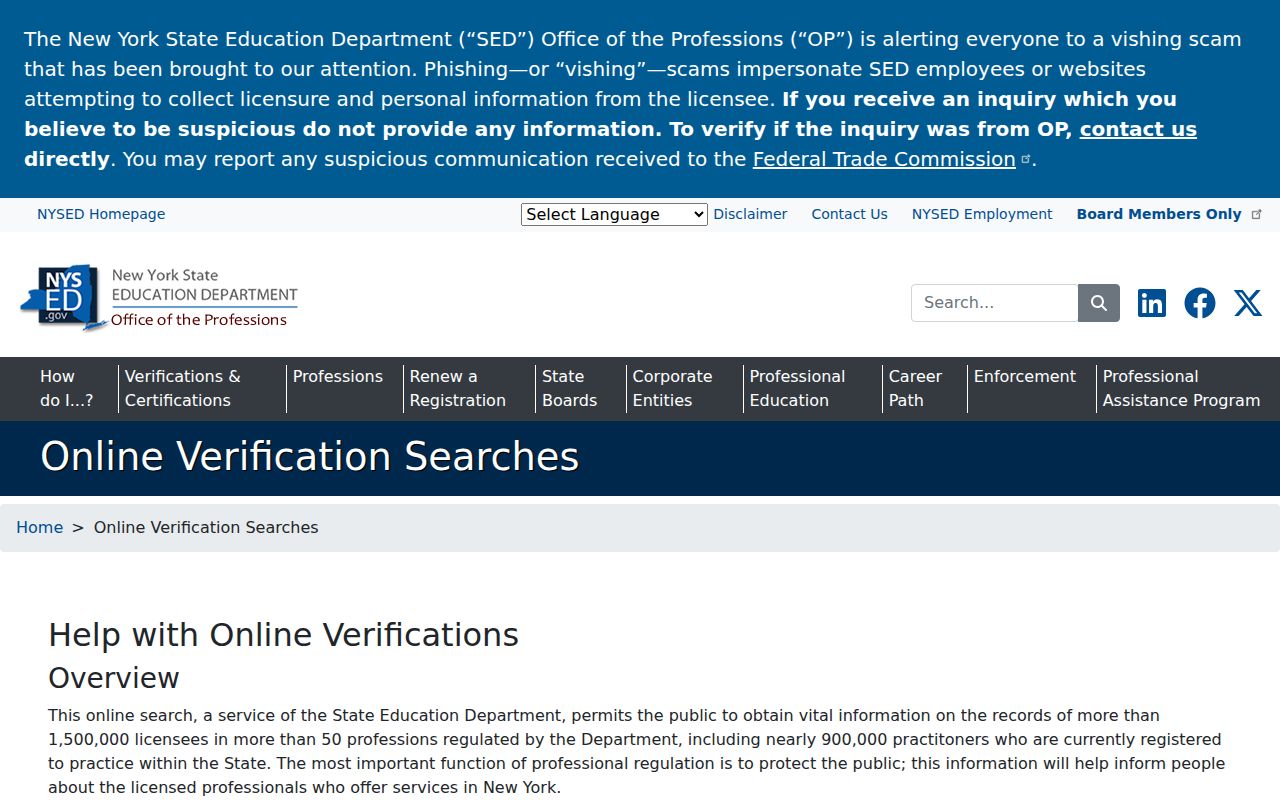
A license record verifies a public credential and nothing more. The location listed there is not proof of a Garden City home address. NYSED also bars republication, aggregation, and automated collection of its data. So treat the official search as a source-specific check on one credential. It is not feedstock for a block list. Never use it to catalog Garden City neighbors.
Garden City Neighbor Privacy
Public access has firm boundaries. New York FOIL opens agency records to the public. But it shields privacy, safety, and other exempt material. Courts also follow their own rules. Confidential voter registration under Election Law §5-508 protects qualifying people. The New York Address Confidentiality Program offers similar protection. So no map, tax roll, or historic listing in this residents directory should be used to reconstruct a protected address. Voter rolls and property rolls have limits built in for a reason.
Keep certain details out of neighborhood research entirely. That means exact dates of birth, personal phone numbers, and signatures. It also means children's information, medical details, sealed material, and sensitive family facts. The New York FOIL guidance walks through the request and appeal framework. For a correction or a narrower request, go back to the original custodian. And remember one more thing. A denied or redacted field does not make the fact underneath available by inference.
Lawful use. Garden City block research is for personal, lawful purposes and local history. Do not use records to monitor, stalk, harass, intimidate, or harm anyone.
Note: A block map is a geographic tool, not permission to contact, identify, or profile every person tied to an address.